



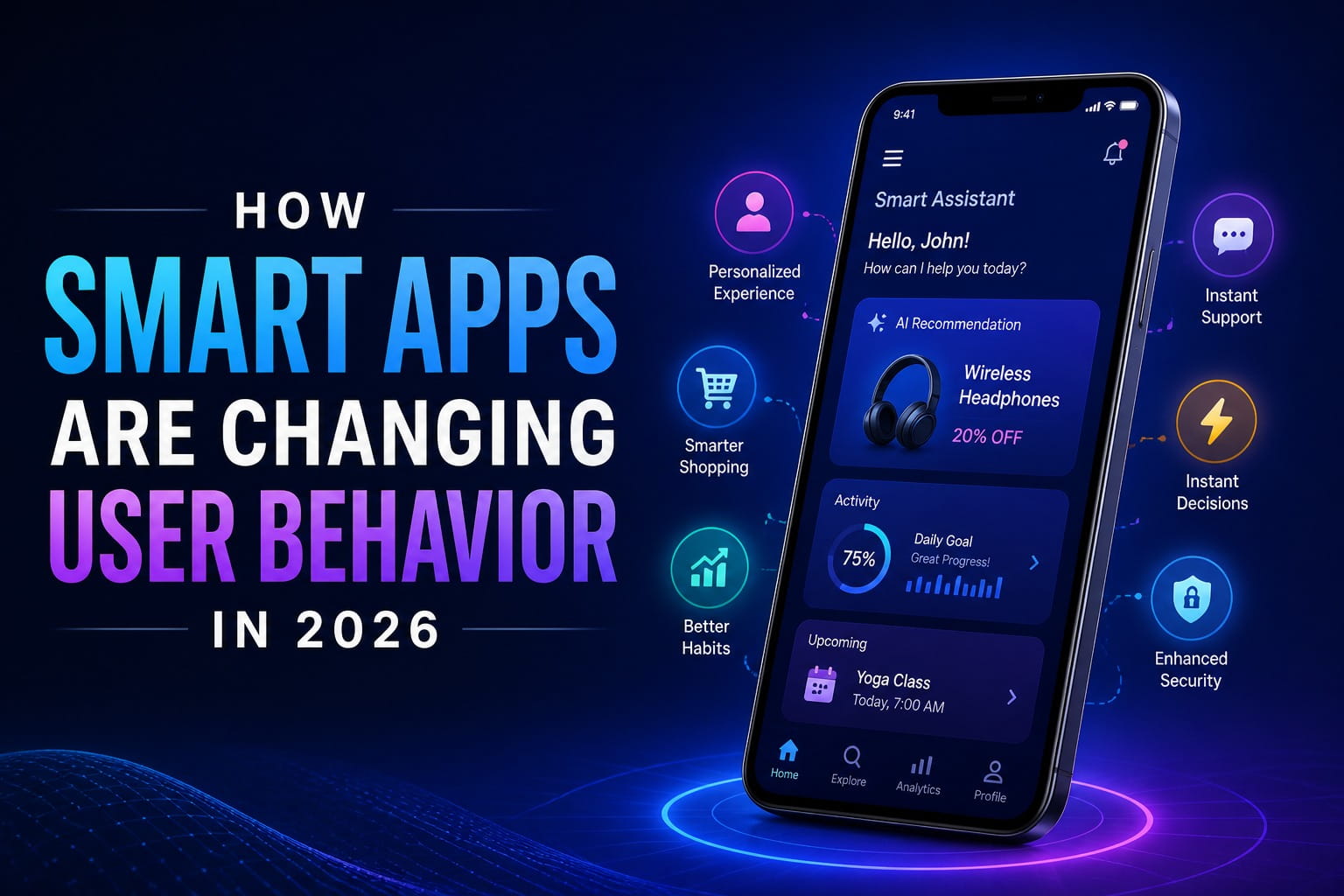
How Smart Apps are Changing User Behavior in 2026
Smart applications are those that operate on the basis of artificial intelligence, machine learning, and analytics. These apps can adapt to user behavior, make decisions based on user preferences without manual intervention, and continuously evolve for better performance. In today’s digital era, *mobile app development* is focused on creating such intelligent applications that enhance user experience and engagement.
The Transformation of Consumer Habits
As technology becomes more sophisticated, there are some notable changes in consumer habits driven by smart apps and modern *mobile app development* practices:
1. More Dependence on Smart Applications
Consumers are increasingly relying on mobile apps for daily activities like online shopping, communication, fitness, and entertainment. Through advanced *mobile app development*, AI enables personalized recommendations and automated services, making apps more essential than ever.
2. Expectation of Personalized Experiences
Today’s users expect apps to understand their needs. In modern *mobile app development*, personalization is a key feature, allowing apps to deliver customized product suggestions, content feeds, and user experiences.
3. Faster Decision Making
Smart apps provide real-time insights and suggestions, helping users make quick decisions. Whether it's purchasing a product or booking a service, *mobile app development* now focuses on speed and efficiency through AI integration.
4. Shift Towards Voice-Based Interactions
With the rise of voice assistants and chatbots, users are moving towards voice-based interactions. This trend is shaping *mobile app development*, making apps more interactive and accessible through natural language processing.
5. Shortened Attention Spans
AI-driven apps deliver quick, personalized content, reducing the time users spend searching for information. As a result, *mobile app development* is now focused on delivering fast, engaging, and bite-sized experiences.
Impact on App Functionality
Smart apps are not only changing user behavior—they are also redefining how apps function in *mobile app development*:
-
Apps can anticipate user needs before they are expressed
-
Automated features reduce manual input
-
Real-time updates improve responsiveness
-
Enhanced security builds user trust
These advancements are making applications more intelligent and efficient.
Role of AI in Mobile App Development
AI is at the core of modern *mobile app development*, helping developers:
-
Build smarter applications
-
Improve user engagement
-
Analyze user data effectively
-
Deliver personalized experiences
This results in better performance and higher user satisfaction.
Conclusion
Smart applications are not only transforming technology—they are transforming user behavior. In 2026, user experience is shaped by intelligent, adaptive, and highly personalized apps. As *mobile app development* continues to evolve, integrating AI has become essential for creating future-ready applications.
For businesses and developers, understanding this shift in user behavior is crucial to staying competitive in the rapidly changing digital landscape.